Our Research
Understanding just energy transitions through community experience
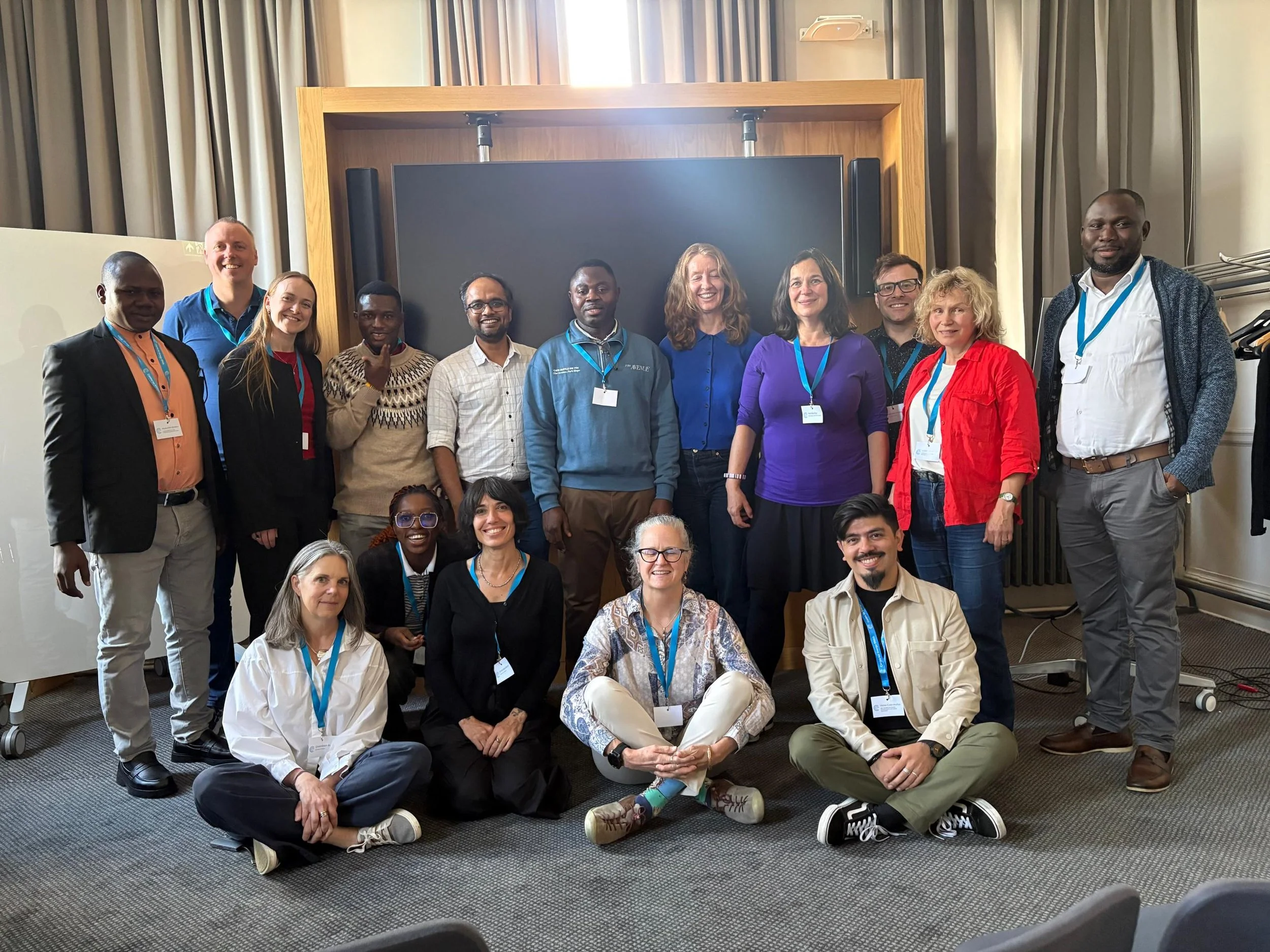
Justice First brings together six case studies across Canada, Ghana, India, Mexico, Norway and the United States. Each explores energy transition within a distinct social, cultural, political and environmental context.
Rather than assuming that concepts such as vulnerability, justice or transition mean the same thing everywhere, we examine how they are understood and experienced locally. Comparing these experiences allows us to identify both shared challenges and important differences — and to ask what energy transition research and policy can learn from communities themselves.
Our research is organized around four interconnected themes:Community & Energy Cultures
Energy is part of everyday life. How people cook, travel, heat their homes, relate to land and place, and understand energy itself is shaped by culture, history, infrastructure and social relationships. We explore how these lived realities can inform energy transitions — and what meaningful community participation and empowerment look like in practice.
Risk & Vulnerability
Climate and energy risks are not experienced equally. Existing social, economic and political inequalities can increase exposure to climate impacts, energy insecurity and the unintended consequences of transition policies. Our research considers vulnerability as contextual and dynamic, while also recognizing the knowledge, capabilities and resilience that communities bring to adaptation.
Indigeneity & Decoloniality
Energy systems and climate responses are deeply connected to histories of land, governance, colonialism and resource extraction. Justice First examines how these histories continue to shape contemporary energy transitions, while foregrounding questions of Indigenous knowledge, self-determination, agency and different understandings of justice.
Transformation & Justice
A just energy transition involves more than replacing one technology or energy source with another. We examine how energy transformation can address deeper structures of inequality and power — including who makes decisions, who benefits, who bears risks and costs, and whose needs and perspectives are recognized.
Our ApproachJustice First brings community-based research into conversation across very different places. Our approach combines local, empirical research with international and interdisciplinary collaboration, allowing us to examine both the particular experiences of individual communities and the wider systems in which they are situated.
Comparison, for us, is not about searching for a single universal model of a "just transition." It is a way of understanding how histories, cultures, political systems, vulnerabilities and relationships to energy shape what justice can mean in different places.
By working through co-creation and engaging with local knowledge, the project seeks to move beyond top-down approaches to energy planning and toward research that recognizes communities as active participants in shaping their own energy futures.
Justice First is supported by the New Frontiers in Research Fund and brings together researchers from institutions around the world:
University of Alberta, University of Calgary, Imperial College London, UCLA's Institute of the Environment & Sustainability, University for Development Studies, LMU Munich, Ruralis, Universidad Autónoma Metropolitana, University of Toronto, Maynooth University, Centre for Environment Education, Tata Institute of Social Sciences